

A bodybuilder’s case for treating joint strength as a longevity habit — and five unglamorous, low-impact moves that matter more than any heroic gym session.
I’ve spent most of my adult life under a loaded barbell. The thing that keeps me up at night isn’t my back or my shoulders. It’s my knees.
I come by the worry honestly. My mother lost the ability to walk in her late seventies. By the time her pain was bad enough to act on, she was considered too old to be a good surgical candidate — so there was nothing left to fix, only something to manage. Two of my siblings have since had double knee replacements. When you watch the same pattern move through a family, you stop filing knee health under someday. You start treating it as an inheritance you’d rather decline.
Here’s the uncomfortable part: my family isn’t an outlier. It’s a preview. Osteoarthritis is the most common form of arthritis in the country, and the CDC counts roughly 32.5 million American adults living with it — about 14 million with symptomatic knee OA specifically. Said plainly, by some estimates nearly half of all adults will develop arthritis in at least one knee before they die. The knee is not a fluke failure. It’s a scheduled one.
790K
knee replacement performed in the U.S. every year
~60%
of those replacement are done on women
1 in 2
adults develop knee osteoarthritis in their lifetime
The risk isn’t shared out evenly, either, and the split is stranger than you’d expect. Before about age 45, knee arthritis actually runs more common in men. After 45 it flips — and women pull decisively ahead, landing somewhere between 30 and 70 percent more likely to develop it depending on whose data you read. That’s why roughly six of every ten knee replacements in this country are performed on women. My mother, in the cruelest sense, was statistically ordinary.
It’s also not a problem that waits for old age to introduce itself. The trouble starts decades before the limp does.
A KNEE’S ROUGH TIMELINE
30s
Muscle mass quietly begins to slip — roughly 3 to 5 percent per decade, and faster the more you sit. The decline outpaces anything you can feel yet.
40s
Knee osteoarthritis makes one of its sharpest jumps in incidence. Most people have no idea it’s already underway.
55–64
New cases of knee OA hit their peak. This is the decade the bill for a sedentary life tends to arrive.
70s+
The replacement window — and, for some, the age at which surgery is quietly taken off the table. My mother reached this stage before she reached a surgeon.
The encouraging part surprised even me. The fix is almost embarrassingly modest. You don’t need brutal training or a complicated program. You need consistency — which is a far harder thing to market, and probably why so few people bother to. Intensity sells memberships. Consistency saves joints. The two are not the same business.
And the knee doesn’t protect itself. The muscles around it do that work. Strengthen and lengthen the calves, quads, hamstrings, and glutes, and the joint finally stops absorbing punishment it was never built to take alone.
Those muscles, though, are on a clock. Starting in our thirties most of us shed 3 to 5 percent of our muscle mass every decade — and strength leaves even faster than size, falling an estimated 12 to 15 percent per decade after fifty. The people who lose the most are reliably the ones who move the least. Which is the hopeful half of the sentence: a good portion of that fade isn’t fate. It’s a choice we keep making by default, every day we don’t do the simple work.
I recently read a piece by occupational therapist Kevin Shelley in The Epoch Times that lays this out about as plainly as I’ve seen. Nothing in it requires equipment, a membership, or heroics. Most of it fits in the time it takes your coffee to brew.
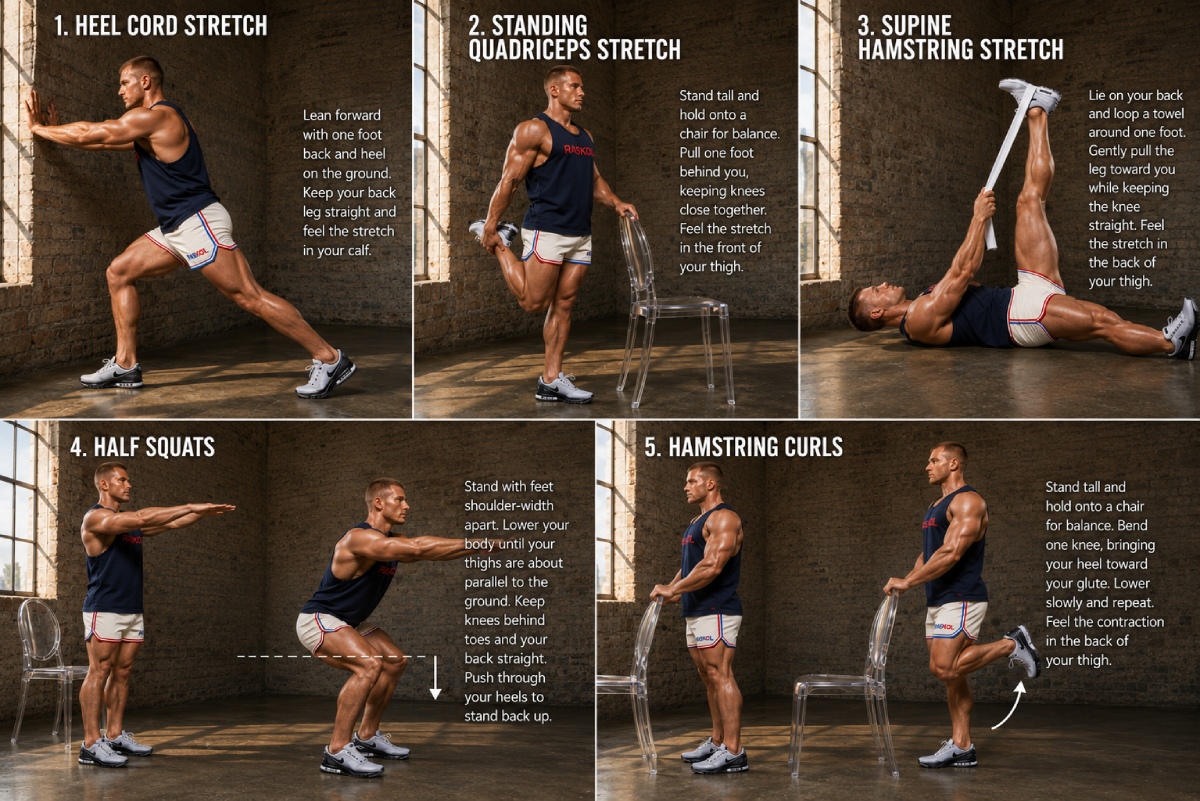
FIVE MOVES FOR KNEE LONGEVITY
1
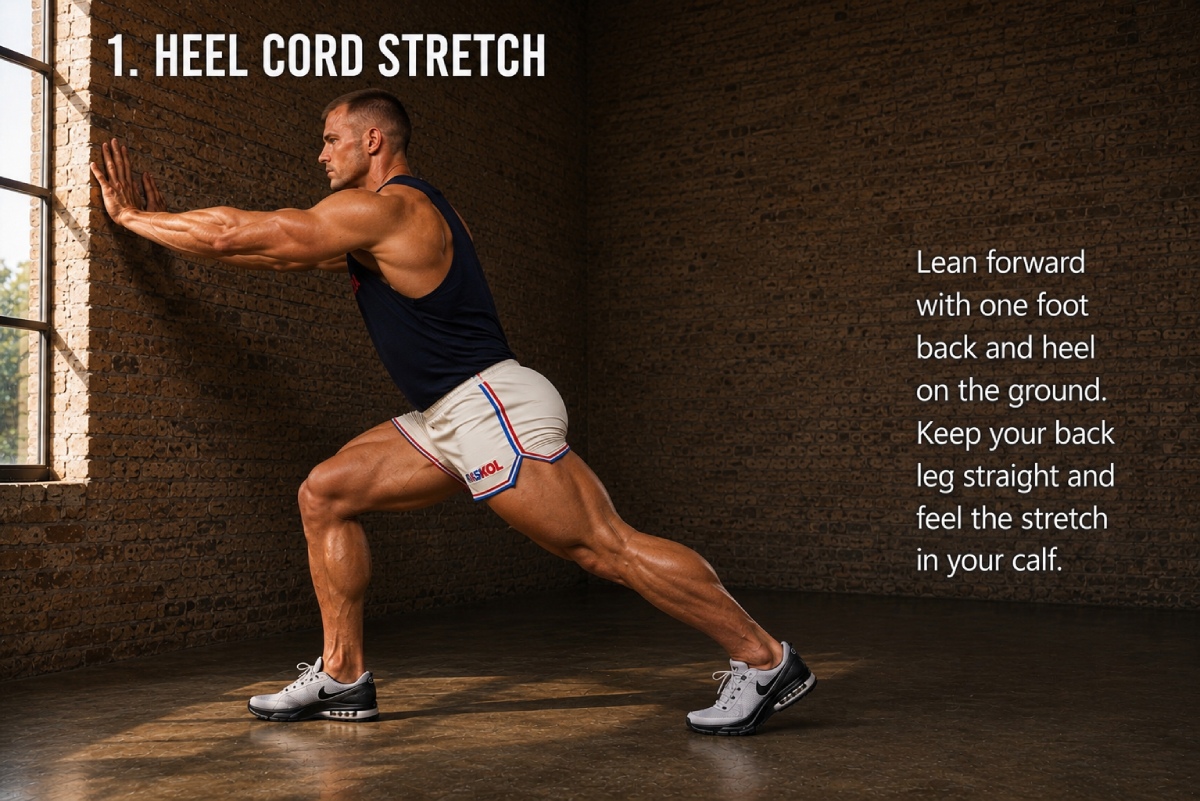
Heel Cord Stretch
Targets the calf and Achilles, which quietly govern how your knee tracks. Tight calves push extra stress into the joint every time you walk or climb a flight of stairs — and most of us climb more stairs in a day than we’d ever guess.
2
Standing Quadriceps Stretch
Tight hamstrings pull on the knee far more than people realize. Lengthening them opens up range of motion and releases the tension that quietly collects behind the joint.
3
Supine Hamstring Stretch
Tight hamstrings pull on the knee far more than people realize. Lengthening them opens up range of motion and releases the tension that quietly collects behind the joint.
4
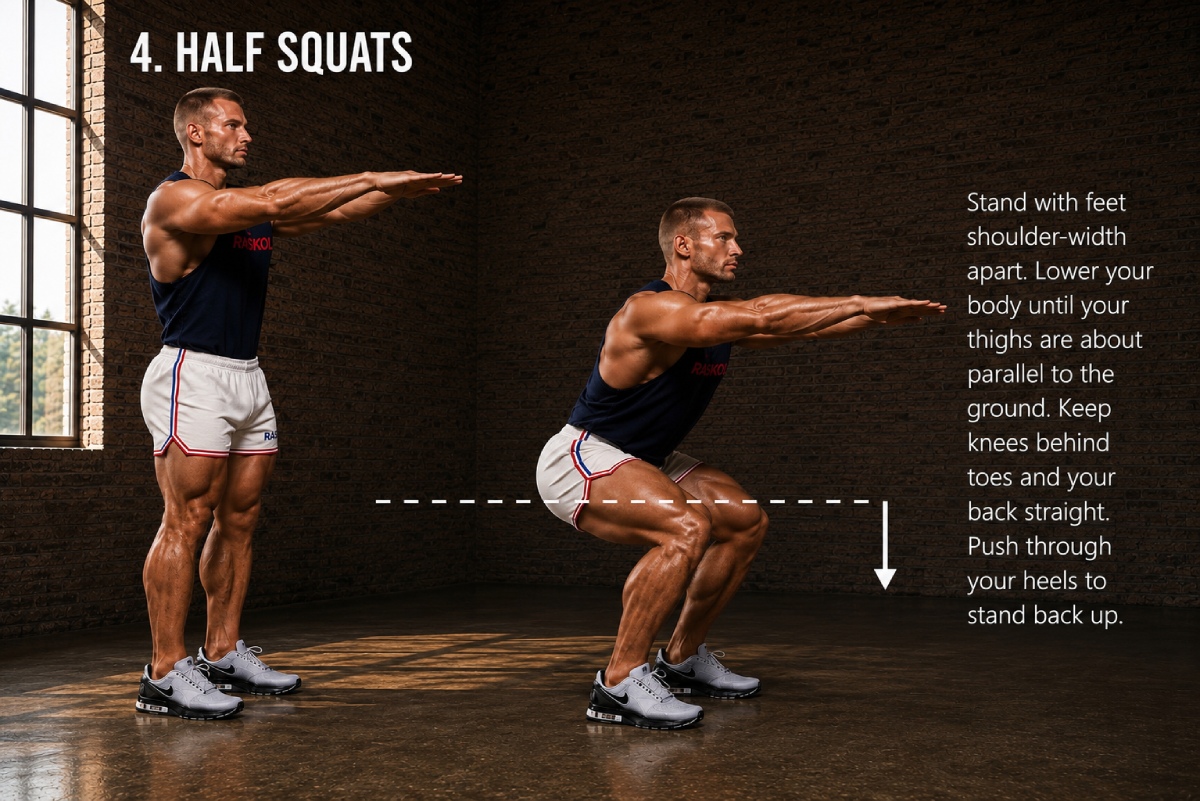
Half Squats
If I had to keep one movement, this is it. Done with control, a half squat builds the quads, glutes, and hamstrings together without asking the joint to go anywhere it shouldn’t. Depth is not the goal here. Clean, repeatable form is.
5
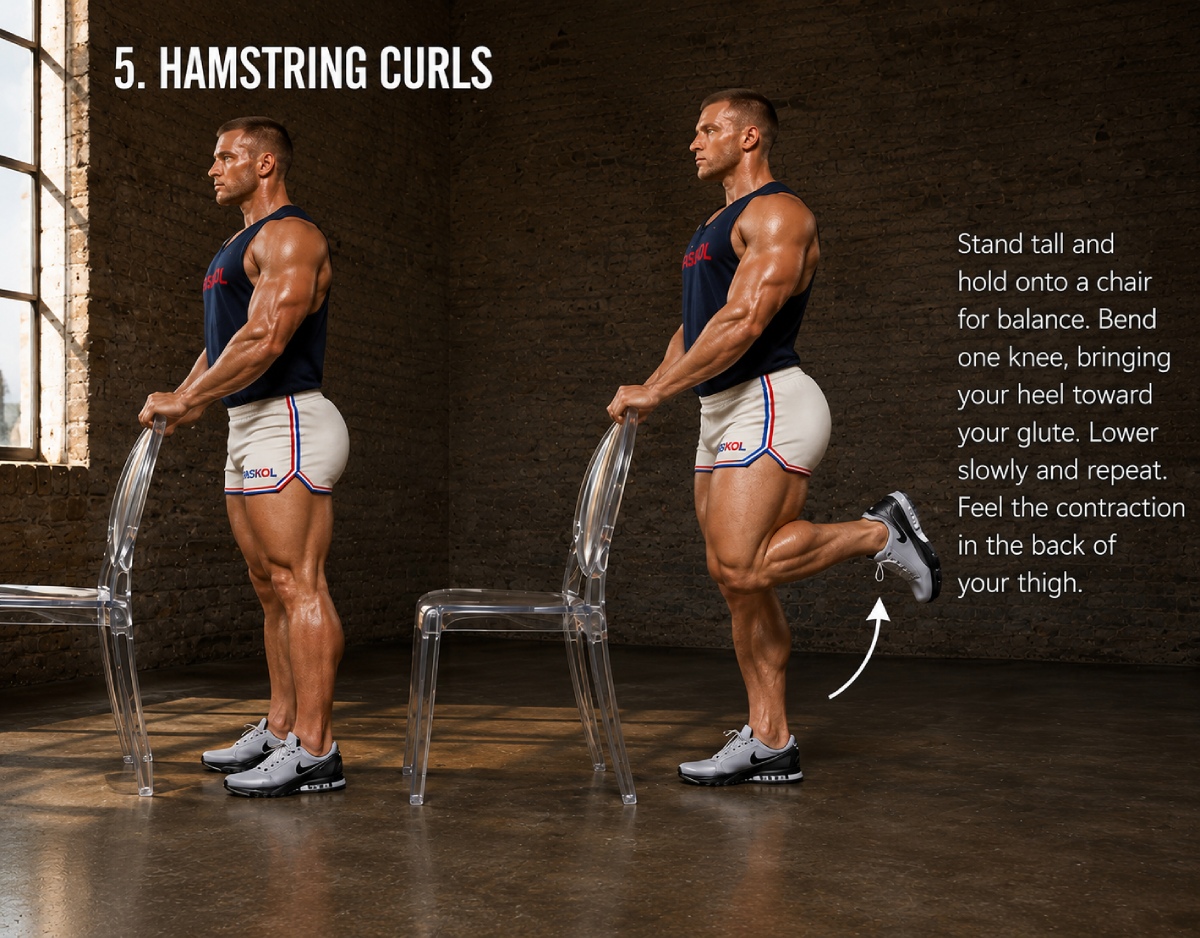
Hamstring Curls
Strong hamstrings stabilize the knee from behind and guard against the imbalances that show up with age. They’re the unglamorous insurance policy nobody photographs for a magazine cover — and exactly the kind of thing that keeps you walking at eighty.
You don’t rescue a knee by going harder. You rescue it by giving it a stronger neighborhood to live in.
What I like about this approach is that it treats the body as something to preserve, not punish. Most knee problems don’t yield to going harder. They ease when the muscles around the joint grow stronger, more balanced, and more willing to share the load.
That’s not just my read from the squat rack. The American Academy of Orthopaedic Surgeons makes the same case in its Knee Conditioning Program: strengthening the muscles around the knee reduces stress on the joint, helps it absorb shock more effectively, and protects mobility over the long haul.
This is also why I think about knees the way I think about longevity itself. A long life isn’t measured only in years. It’s measured in mobile years — the ones you spend walking, traveling, getting up off the floor without a plan of attack. Your knees have a great deal to say about how many of those years you actually get to keep.
My mother didn’t get the choice. By the time the question reached the table, the answer had already been made for her. I’d rather have that conversation now, on my own terms and on my own two feet, than later in a surgeon’s office I’ve aged out of. So I stretch the calves. I keep the half squats clean. I do the curls nobody photographs. It is not heroic, and that is precisely the point.
Credit to Kevin Shelley and The Epoch Times for the original article and exercise framework, and to the American Academy of Orthopaedic Surgeons for the underlying conditioning research. Figures drawn from the CDC, Harvard Health Publishing, the Cleveland Clinic, the Osteoarthritis Action Alliance, and peer-reviewed prevalence data. This piece reflects personal experience and is not medical advice — talk to your own clinician before starting a new routine, especially if you already have knee pain.